
1) Emergency repair kit for shrink-wrap while transporting
Keep this kit in the truck or vessel for repairs if needed.
- Heat-shrink tape matching the module colour. Use wide tape to maximise the adhesion surface. Recommended width 10 to 15 cm. HEAT3 options: DS-704 (9.6 cm) or DS-706 (14.4 cm).
- High-grip tape for humid conditions. HEAT3 option: DS-Supergrip (10 cm).
- Moisture-absorbing rag for cleaning and drying under the tape
- Folding ladder for safe access at height
- Sharp knife for film cutting. Recommended: DS-007 film knife
- Drill and screws for re-fixing strips if needed
- Heat-generating device for warming tape and film in cold or wet weather
- Phone or camera for documenting damage and repairs
- Extra piece of heat shrink film for quick covering of larger damage
2) Loading and departure checklist
Correct orientation on the trailer
- If possible, load the module so the closed side faces the driving direction.
- The packaging should lie against the product in the direction of airflow.
Immediate inspection after lifting
- Walk around the module and check if lifting slings or chains have slid or pressed against the film.
- If you see damage, report it to the shipper representative before departure. Product damage may have occurred during lifting.
- If the shipper confirms the product is fine or can be repaired at the final destination point, then the cover can be repaired.
Strips and fastenings
- If the unit is packed with wooden strips, visually check that the strips are stable
- If anything is loose, ask the shipper to add fixing screws before you leave.
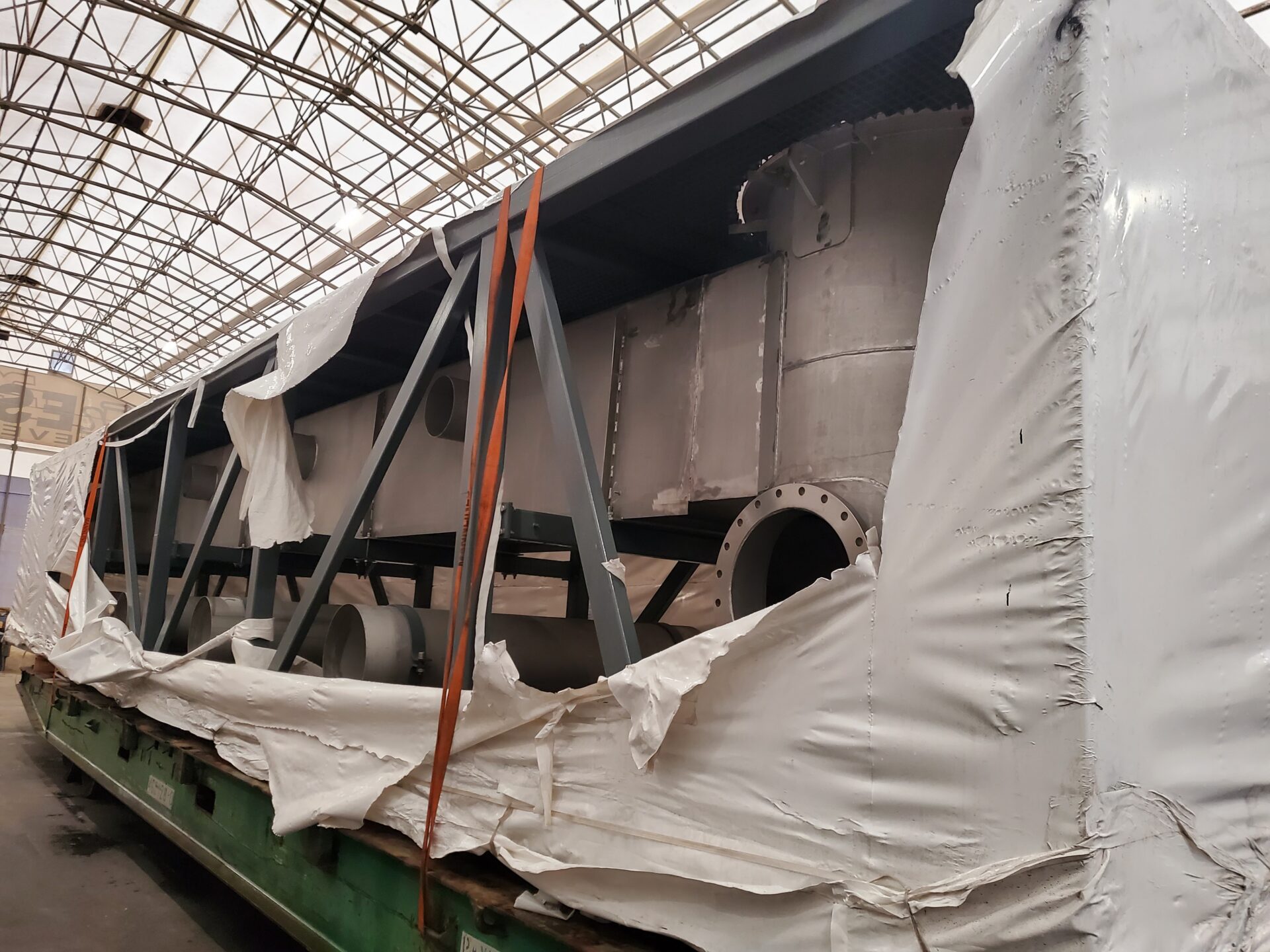
3) Straps and belts: the most common failure point
Straps over sharp roof edges are the most common place where cuts start, then wind opens the film further, and moisture enters.
- Do not drag straps over sharp edges.
- Use strap corner protectors under straps where they cross sharp edges.
- After you remove the straps at the destination, inspect those edges and the tape area for damage.
4) In transit monitoring: what to check and what it means
Keep the packaging tight
During transport, the shrink wrap should stay tight around the unit with minimal movement. Proper strips, heating, and taping should prevent film flapping.
If the packaging becomes a “balloon“
“A balloon effect” means air is entering the packaging and can not get out fast enough. Decide immediately if you can stop inward airflow or if you must reduce speed and repair.
Check:
- Are the strips still stable?
- Can you see a tear or opening in the film?
- Are strap areas cutting into the film?
5) Road hazards: branches, cables, traffic signs
When you see overhanging branches, cables, signs, or traffic lights:
- Plan your line early, keep distance where possible.
- Reduce speed before passing close hazards.
If contact is unavoidable:
- Pass at minimum speed so the object can slide along the tight, slippery film.
- If the film tears, stop and tape the tear as soon as possible. If you cannot stop immediately, reduce speed to prevent the cut from spreading.
6) Arrival checklist at delivery point
- Remove vehicle straps and chains.
- Inspect packaging at all strap paths and sharp edges.
- Check for road damage from branches, cables, signs, or abrasion.
- Tape any damage properly. Use extra film for larger areas if needed.
- Document damage and repairs with clear photos before and after repair.
- Inform the next carrier or site contact about repaired areas so they can monitor the spot.